

What is e-Invoice?
An e-invoice, short for electronic invoice, is a digital version of a traditional paper invoice. It is used in electronic format, typically exchanged between businesses or between businesses and government entities. E-invoices are part of the broader concept of electronic invoicing, which aims to automate and streamline the invoicing process.

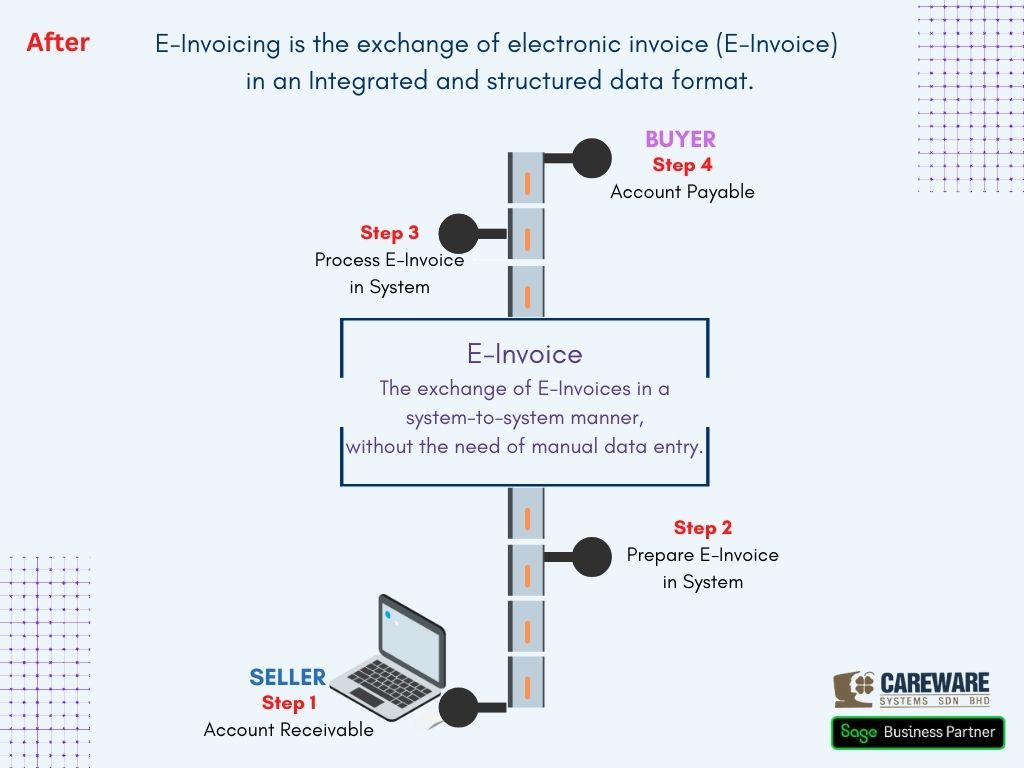
Key features of e-invoices include:
1. Digital Format: E-invoices are created, transmitted, and stored in digital formats, such as XML (eXtensible Markup Language) or PDF.
2. Data Integration: E-invoices often facilitate seamless integration with accounting and enterprise resource planning (ERP) systems, reducing manual data entry and minimizing errors.
3. Automation: E-invoicing systems can automate various aspects of the invoicing process, including generation, delivery, receipt, and payment.
4 Cost Savings: By eliminating paper, printing, and postage costs associated with traditional paper invoices, e-invoicing can result in cost savings for businesses.
5. Efficiency: E-invoicing accelerates the invoicing cycle, leading to faster payment processing and improved overall efficiency in financial transactions.
6. Compliance: Many countries and regions have adopted or are moving towards e-invoicing as part of their regulatory frameworks to enhance tax compliance and reduce fraud.
7. Security: E-invoicing platforms often incorporate encryption and secure transmission methods to ensure the confidentiality and integrity of invoice data.
The adoption of e-invoicing varies globally, with some countries mandating its use for certain transactions or industries. The shift towards e-invoicing is driven by the desire to modernize and digitize business processes, reduce environmental impact, and improve overall efficiency in financial transactions.
Timeline for Malaysia e Invoice


